Patios Built Properly — Levels, Drainage, and a Finish That Doesn’t Fall Apart
If you want a patio that stays level, drains correctly, and still looks good after a few British winters, the groundwork matters more than the brochure picture. Northwood Landscape installs patios across Cheltenham with the same old-school rule: do the prep properly, then the surface lasts.
This page covers:
- Choosing between sandstone, porcelain, and concrete slabs
- What “proper” installation actually means (depths, base, falls)
- Jointing and edging options that hold up over time
- Aftercare: what to do (and what not to do) with cleaning and sealing
- How patios link into the rest of the garden: fencing, turf, planting
Want a whole-garden refresh? See Landscaper in Cheltenham or check Fencing, Turf, and Planting.
Patio Installation in Cheltenham (Done the Traditional Way)
A patio isn’t just “a few slabs on some sand.” That approach is exactly why you see wobbly corners, rocking flags, puddles that never disappear, and joints that crumble after the first frost. The surface you walk on is the last step — the stability comes from the layers underneath and the attention to detail around edges, drains, and thresholds.
In Cheltenham, you’ll often get a mix of ground conditions: compacted clay, made-up ground from previous works, and gardens with levels that aren’t obvious until you start setting lines. A good patio installation accounts for: excavation depth, a stable sub-base, correct falls (so water runs away from the house), and a bedding layer that supports the slab evenly.
If you’re also looking at paths or a driveway-style finish, you might want our Paving page too. If your patio is part of a full rebuild, head to Landscaper in Cheltenham for the bigger picture.
Recent Patio & Garden Finishes
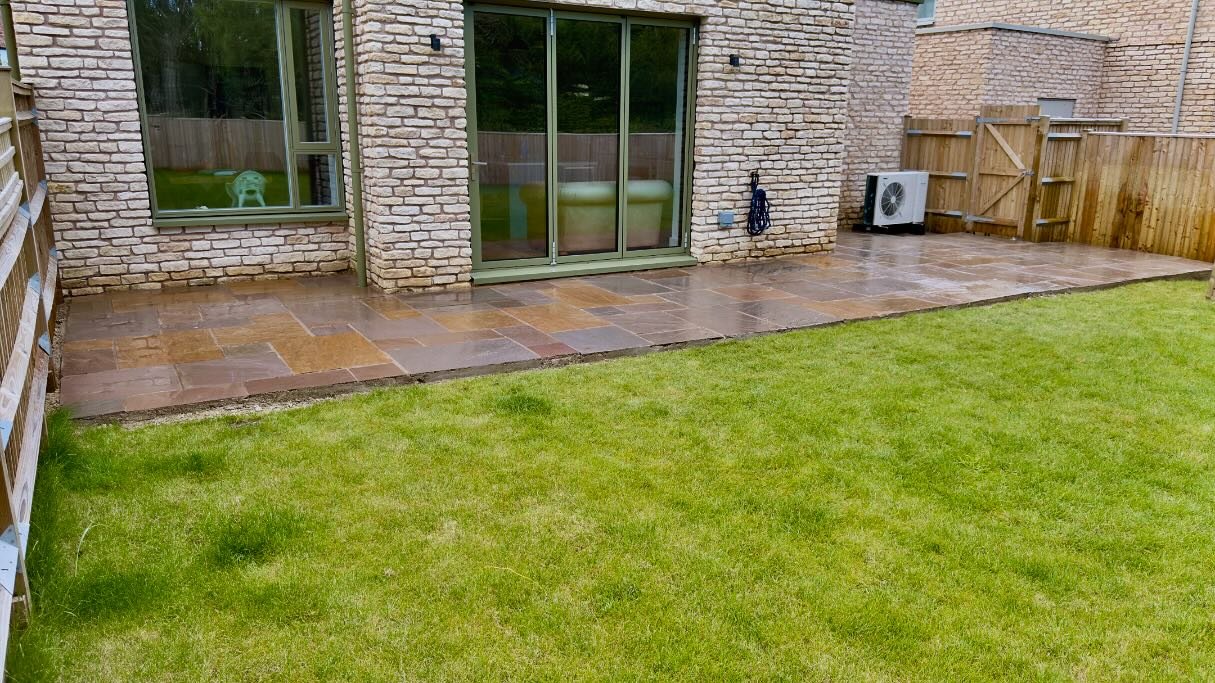
A patio should look sharp from the doorway and still look sharp when you’re standing on it. Here are a few examples using your site images (so this page isn’t just text).
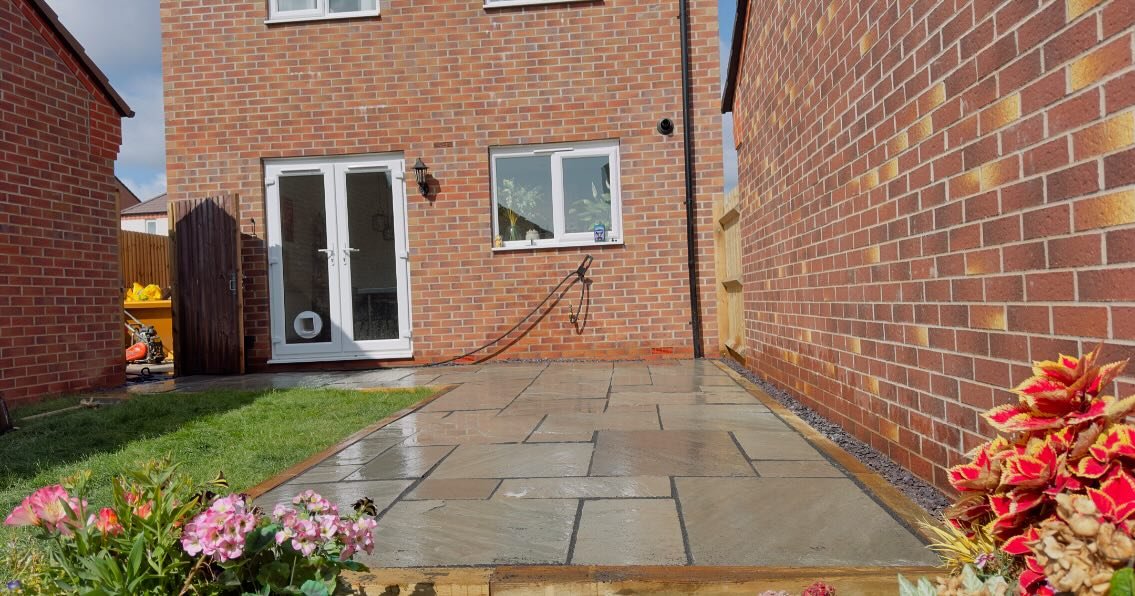
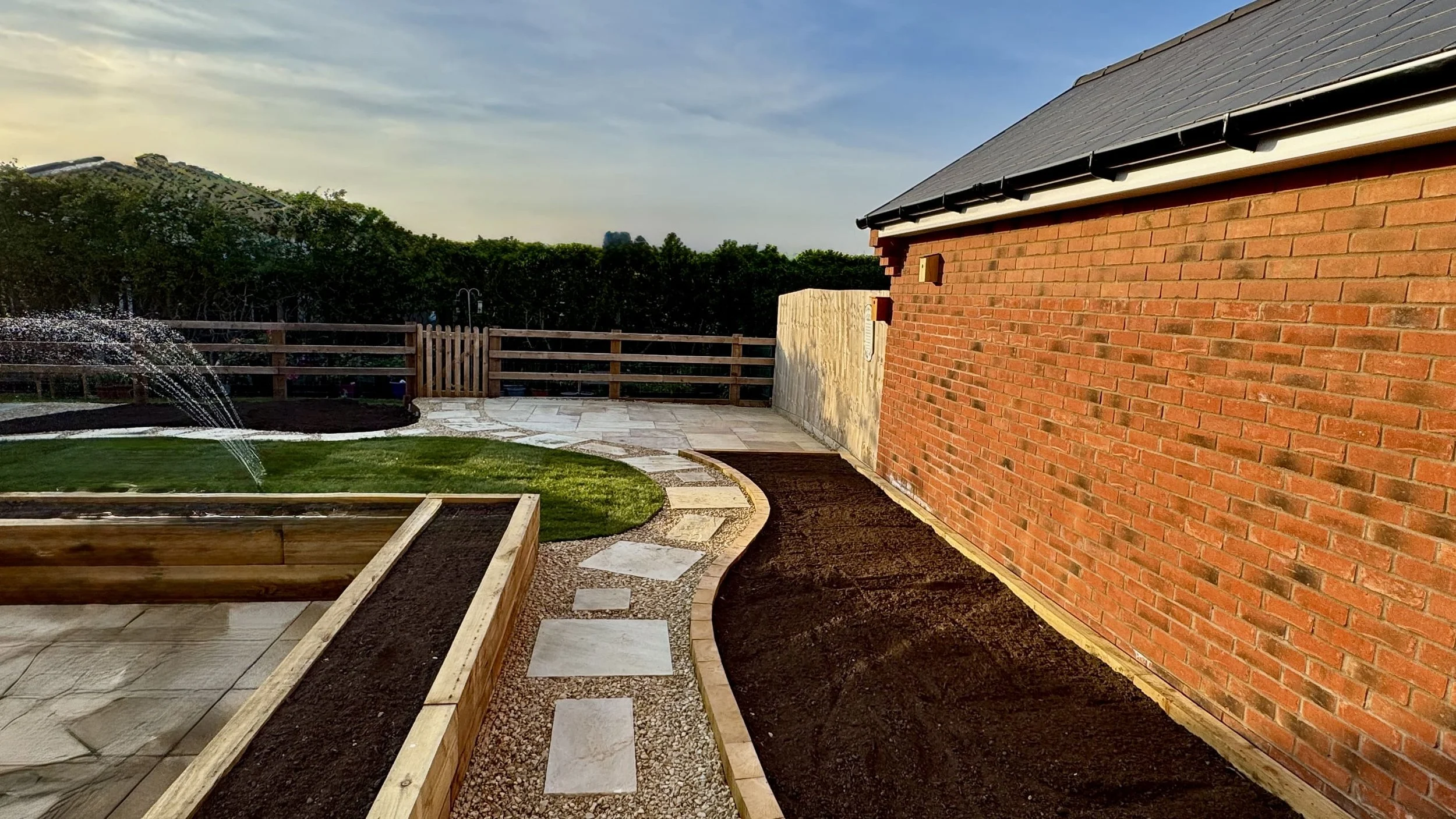
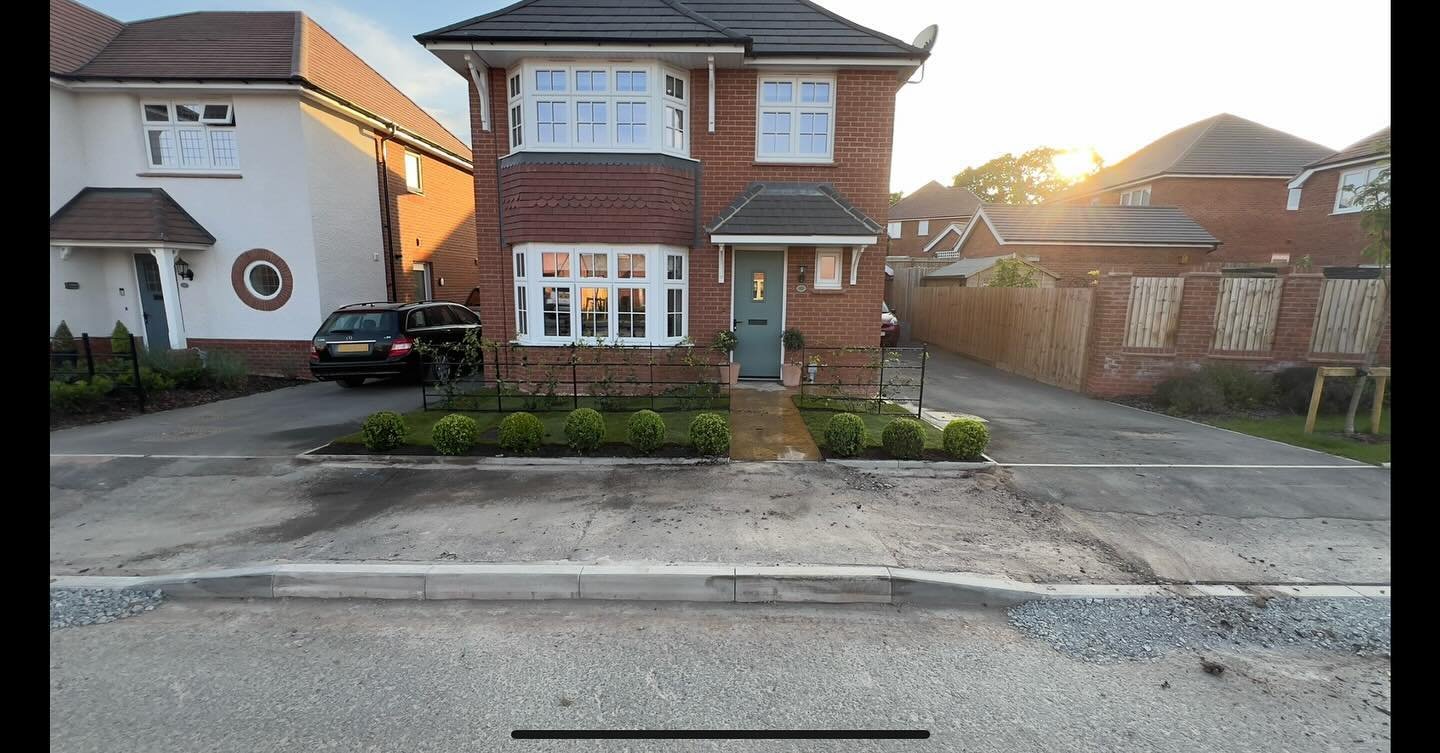
These are the kinds of finishes we aim for on every job: tidy edges, consistent levels, and no “that’ll do” corners.
Choosing Your Patio Material: Sandstone vs Porcelain vs Concrete Slabs
Most patio decisions come down to three things: how you want it to look, how you want it to feel underfoot, and how much maintenance you’re willing to do. There’s no magic slab that’s perfect for every garden. What matters is choosing the right material for your lifestyle and then installing it properly so the benefits actually show.
Natural Sandstone Patios +
Sandstone is the classic British patio choice for a reason. It’s got natural variation, it ages well when cared for, and it works beautifully with traditional Cheltenham gardens — especially where you’ve got planting, lawns, and timber work. A good sandstone patio looks like it belongs there, not like it was dropped from a catalogue.
- Best for: natural look, character, period properties, warm tones
- Feel: textured, “stone underfoot” (not perfectly uniform)
- Slip: generally good, especially with riven textures (still needs correct falls)
- Care: benefits from sensible cleaning and optional sealing depending on finish
The key with sandstone is respecting it as a natural material. Some variation is the whole point — but the installation needs consistent support so the slabs don’t move and the joints don’t fail.
Porcelain Patios +
Porcelain is the “clean, modern, low-porous” option. It’s popular for contemporary gardens because it stays looking crisp, it resists staining better than many natural stones, and it’s easier to keep tidy if you’re not into constant scrubbing. Done right, porcelain looks high-end. Done wrong, it shows every mistake — so the prep and cutting need to be spot on.
- Best for: modern finish, consistent colour, minimal porosity
- Feel: flatter and more uniform, sharp lines
- Slip: use outdoor-rated anti-slip porcelain (don’t cheap out here)
- Care: generally lower maintenance, but joints and edges still matter
Porcelain demands correct adhesives/bedding approaches and accurate levels. It’s not the material to “wing it” on.
Concrete Slab Patios +
Concrete slabs are practical, cost-effective, and they’ve been used in British gardens for ages. Modern concrete paving comes in better finishes than people expect — smoother, textured, or even stone-effect. If you want a solid patio without chasing premium material costs, concrete can be the sensible option, especially for utility areas, side returns, or family gardens where the patio takes a beating.
- Best for: practical spaces, value-for-money, straightforward look
- Feel: stable, simple, functional
- Slip: depends on finish; textured options help
- Care: keep joints clean; avoid aggressive pressure washing that erodes pointing
Concrete is only “basic” if the install is basic. With tidy edges, correct falls and neat jointing, it still looks smart.
Not sure which one suits your garden? That’s what the site visit is for. We’ll talk through options and tie it into the rest of the space — paths (Paving), boundaries (Fencing), and lawn areas (Turf).
How We Install Patios: The Bits You Don’t See (But You’ll Notice Later)
A patio can look perfect on completion day and still be a problem six months later if the base is wrong. Most failures come from one of four issues: insufficient excavation, weak sub-base, poor compaction, or bad water management. The surface is only as good as what’s under it.
Survey, levels, and drainage plan
Before any digging, we check access, existing levels, and where water currently goes. We set out the patio area properly and work out falls. The goal is simple: water moves away from the house and doesn’t sit in the middle of the patio.
Excavation to correct depth
Excavation depth isn’t guessed. It’s determined by the finished height you need, plus the thickness of the slab, bedding, and sub-base. Cutting corners here is how you end up with a patio that “floats” and shifts, or a threshold that’s too high.
MOT Type 1 sub-base (where required)
For long-term stability, a compacted MOT Type 1 sub-base is the backbone. It provides load-bearing strength and reduces movement. This is especially important in areas that get foot traffic, furniture, and the odd heavy item dragged across.
Compaction in layers
Compaction is not “one quick pass and done.” Proper compaction is done in layers so the base becomes solid, not spongy. This is one of those unglamorous steps that separates a patio that lasts from a patio that needs lifting.
Bedding layer and accurate laying
The bedding layer needs consistent support beneath each slab. That’s how you avoid rocking corners and hollow spots. We lay to lines, check levels continuously, and keep the pattern tight and intentional.
Jointing, edging, and finishing details
Joints and edges are where patios either look premium or look rushed. We keep lines neat, cuts tidy, and edges secure. A strong edge restraint helps keep everything locked in place over the years.
Jointing, Pointing & Edges: The Difference Between “Nice” and “Proper”
People focus on slab choice (fair enough), but the day-to-day look and performance often comes down to the finishing details: joints that don’t crumble, edges that don’t spread, and transitions that don’t look like a bodge.
Why joints fail +
Jointing fails when the base moves, when joints are too shallow, or when cleaning is too aggressive. A pressure washer aimed straight into the joint is basically a fast-forward button to re-pointing. The same goes for scraping out joints with metal tools every spring.
A patio should be maintainable, not fragile — but you still need to treat it like a built surface, not a concrete yard.
Edges that hold the patio together +
Strong edges act like a frame. Without proper edging, patios can creep and spread over time, especially on larger areas or where the patio meets softer ground. That’s when you start seeing widened joints, uneven lines, and slabs shifting.
If the patio ties into boundaries or needs screening, have a look at Fencing & Boundaries.
Thresholds, steps, and transitions +
The neatest patios don’t just stop abruptly. We think about the transition into the lawn, the step from the door, and the route through the garden. That’s how you avoid the “new patio stuck in the middle of a messy layout” look.
If you want the whole space to flow, pair the patio with Turfing / Lawn Work and Planting.
Patio Care & Maintenance: Sandstone, Porcelain, and Concrete (What Actually Works)
Here’s the honest truth: even “low maintenance” patios still need some care if you want them to stay looking sharp. The UK is wet, shady corners grow algae, leaves stain, and joints collect debris. The goal isn’t perfection — it’s keeping the patio clean, safe, and easy to use without turning it into a monthly chore.
Sandstone care +
Sandstone is natural and porous compared to porcelain, so it benefits from routine sweeping and occasional gentle washing. The biggest wins are simple: keep organic debris off it (leaves, soil, mulch) and don’t let algae build up in shaded areas.
- Sweep regularly to stop staining and grime “bedding in”
- Use a gentle clean — avoid blasting joints to pieces
- Consider sealing if you want easier cleaning and more stain resistance (depends on finish and preference)
If you love the weathered, natural look, you can keep sandstone looking smart without chasing that “brand new” shine.
Porcelain care +
Porcelain is low-porous, which is why it’s easier to keep clean. That doesn’t mean it’s immune to dirt — it just means spills and grime don’t soak in as easily. Outdoor porcelain also depends on good jointing and drainage, so water doesn’t sit and create slippery patches.
- Regular sweep + occasional wash is usually enough
- Avoid harsh acids/strong chemicals unless you know what you’re doing
- Don’t ignore joints — clean gently and keep them intact
Porcelain rewards tidy upkeep. It’s the “looks crisp with minimal effort” option when installed correctly.
Concrete slab care +
Concrete is practical but can show surface staining if it’s constantly covered in leaves or soil. The trick is to keep it clear and avoid aggressive jet washing. Concrete patios often look best with clean edges and maintained joints.
- Sweep debris away before it stains
- Wash gently; don’t strip jointing out
- Watch shaded corners for algae and treat early
Concrete is a workhorse. Look after it sensibly and it will do its job for years.
Patio Installation Areas Around Cheltenham
We install patios across Cheltenham and nearby areas. If you want something more local, these pages are a good starting point:
Not listed? If you’re nearby, just ask. It’s easier to have a straight conversation than play postcode bingo.
Patio FAQs
How long does a patio installation take?
It depends on size, access, and ground conditions. A compact patio can be completed quickly; larger patios and multi-level gardens take longer. The big variable is prep: if excavation and base build are done properly, you get the long-term benefit. We’d rather take the correct time and do it right.
Do you install patios in porcelain, sandstone, and concrete slabs?
Yes. We install natural sandstone, outdoor-rated porcelain, and concrete paving slabs. We’ll help you choose a finish that suits the house and how you actually use the space — not what looks trendy for five minutes.
Do patios need sealing?
Sometimes. Sealing can help with staining and make cleaning easier, especially on more porous natural stone. But sealing isn’t a magic shield, and it’s not always necessary. We’ll talk you through the pros/cons based on the material you pick and where the patio sits (shade, trees, traffic).
What maintenance should I expect?
Sweep debris regularly, keep joints intact, and clean occasionally. The main “maintenance mistake” is overdoing pressure washing. Used properly it’s fine; used aggressively it strips joints and roughs up surfaces. Think “clean”, not “sandblast”.
Can you include steps, edging, or a path?
Yes. Steps, edges, and paths are often what make the patio feel like part of a designed garden instead of an add-on. If you want a full refresh, we can pair the patio with fencing, turf, and planting.
Do you provide a written quote?
Yes — after a site visit. You’ll get a clear scope and price so you know what’s included.
Get a Free Quote for a Patio in Cheltenham
Tell us what you’re aiming for — sandstone warmth, porcelain clean lines, or a solid concrete slab patio that just works. We’ll come out, check levels and drainage properly, and give you a clear written quote.
Want proof before you book? Read customer reviews and then get in touch.