

Garden Paths in Cheltenham: Practical Routes That Look Sharp
A good garden path does two things: it gives you a dry, safe route through the garden and it makes the layout feel intentional. In the UK, paths matter because grass routes turn to mud. In Cheltenham, clay soil makes it worse. Northwood Landscape installs garden paths in Cheltenham using paving, stone, gravel and stepping stones — with proper groundwork, correct falls, and tidy edging so the path stays put and stays looking smart.
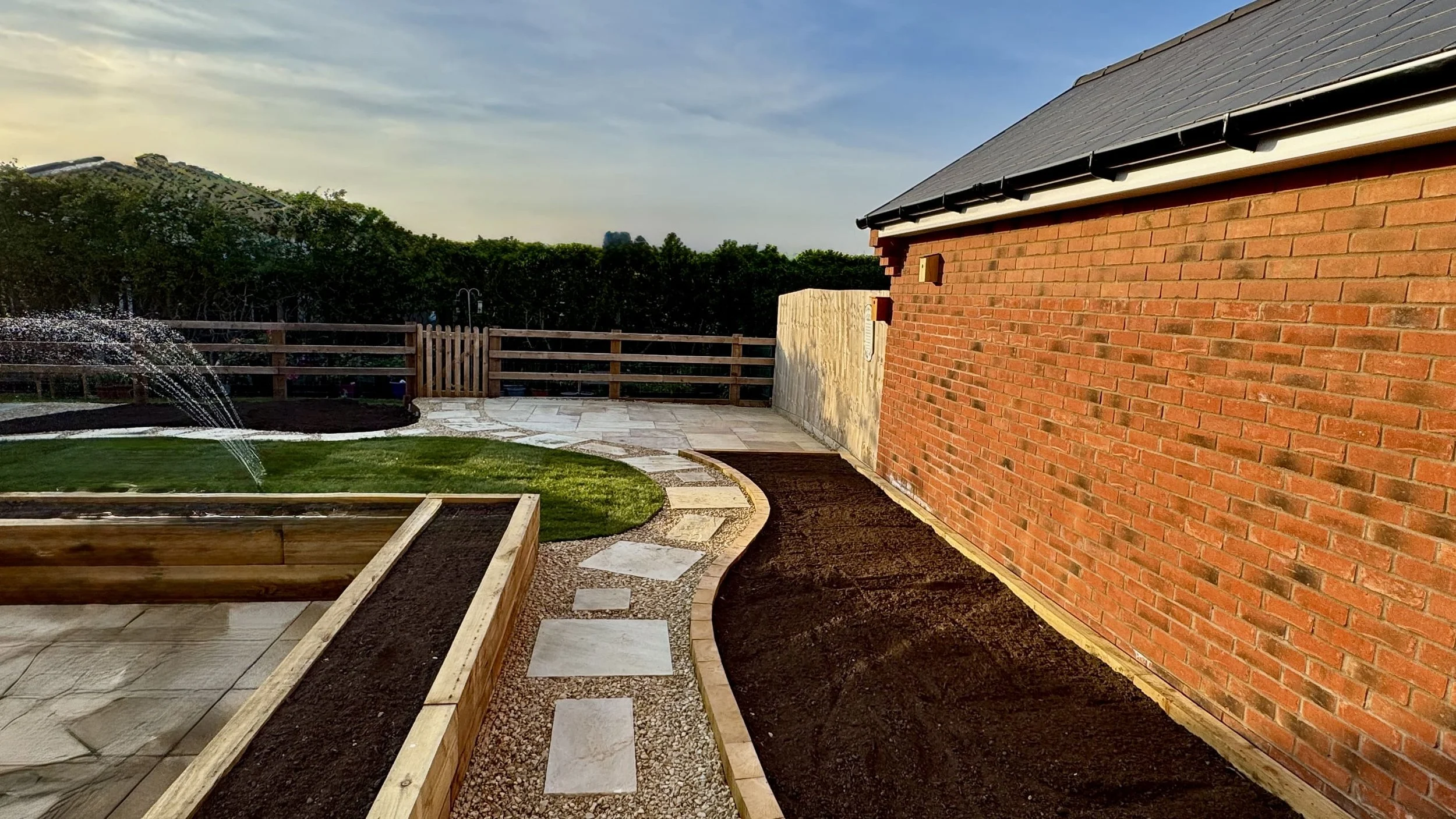
Paths are commonly used for:
- House-to-garden routes without mud
- Routes to sheds, bins, and side access
- Connecting patio to lawn and planting zones
- Terraced gardens with steps and landings
- Creating structure in “flat” gardens
Related pages: Patios, Paving, Garden Steps, Garden Renovations.
Why a Proper Garden Path Is Worth It
A lot of gardens in Cheltenham have the same issue: the “route” through the garden is just grass. In summer, fine. In winter, it turns into a mud track. Then you get worn channels, puddling, and that constant mess dragged into the house. A proper path solves it, and it does it in a way that improves the look of the garden.
A path also changes how the garden feels. It guides you. It breaks up big empty spaces. It creates structure between patio, lawn and planting. That’s why paths are a standard part of well-built gardens — they’re not just “a nice extra”.
If you’re planning a full makeover, start here: Garden Renovations. If you want the wider paving options, see: Paving.
Garden Path Options
There isn’t one “best” path type — it depends on how you use the garden, the style you want, and whether you want minimal maintenance or a more traditional look. Here are the most common path options we install.
Best for clean routes, modern gardens, and tying in with patios. Strong, tidy, long-term.
Traditional and cost-effective. Needs correct base and strong edging so gravel stays where it belongs.
A softer look through lawns or planting. Works best when the spacing feels natural and the stones sit solid.
Great for curves, neat detailing, and matching drive/patio styles. Needs proper restraint and base.
Paved garden paths (stone, porcelain, concrete)+
Paved paths are the “solid” option. They give a clean route through the garden and they look smart year-round. They also work well alongside patios because you can match the style and keep the whole layout consistent.
- Natural stone: traditional character, great in period gardens.
- Porcelain: modern, tidy, low-porosity surface (less staining).
- Concrete slabs: practical, affordable, and strong when installed properly.
Gravel paths (done properly so they don’t spread)+
Gravel can look excellent in Cheltenham gardens — especially more traditional properties — but only if it’s contained properly. Without edging and a proper base, gravel spreads into lawns and borders, becomes patchy, and looks messy.
- Edging: the most important part of a gravel path.
- Base build: stops rutting and soft spots.
- Weed control: correct membrane use and tidy finishing helps long-term.
Stepping stones (the “natural route” look)+
Stepping stones are ideal if you want a softer feature route across a lawn or through planting. The key is setting them at the right level so they don’t rock, don’t become trip hazards, and can be mown around neatly.
Tip: stepping stones need solid bedding. If they’re just “dropped onto soil”, they will wobble and sink.
Block paving paths (great for curves and detail)+
Block paving is a strong option for paths that curve around planting or connect multiple zones. It can also match block paved patios or driveways for a consistent look. Edging restraint matters here — it holds everything tight.
Edging: The Difference Between “Tidy” and “Messy”
If there’s one thing that separates a professional path from a DIY one, it’s edging and finishing. Edging controls the shape, holds materials in place, and keeps lines clean over time. It also makes the garden easier to maintain because borders don’t creep into paths.
Common edging options+
- Stone edging: traditional and premium.
- Block edging: neat and strong, great with block paving.
- Metal edging: modern, crisp line, good for curves (when installed right).
- Timber edging: can work, but needs correct fixing to stay straight.
Edging matters for lawns too: Lawns.
Why paths go wobbly and spread+
Weak edge restraint and poor base build. The path then gets foot traffic, water movement, and freeze/thaw action — and slowly the materials creep outward, joints open up, and the surface becomes uneven.
That’s why “proper groundwork” isn’t a sales line. It’s how the job lasts.
Paths and Drainage: Stop Water Causing Problems
Paths need to shed water. If water sits on a path, it grows algae, stains, and becomes slippery. If water runs across a path and can’t escape, it undermines the edges. That’s why we build paths with sensible falls and plan where water goes.
If your garden is generally wet or waterlogged, see: Garden Drainage & Soakaways.
Paths Work Best When They Tie the Whole Garden Together
The best gardens have a logical flow. Paths help you move between zones and they stop the garden feeling like a random collection of features. They also pair naturally with steps, retaining walls, patios, lawns, and raised beds.
Paths + steps (terraced routes)+
On sloping gardens, paths and steps go together. Steps create safe level changes, paths make the route feel natural.
See: Garden Steps.
Paths + patios (consistent paving finish)+
Paths + raised beds (clean planting edges)+
Raised beds frame paths and keep soil off the walking route. They’re one of the best ways to make a path look designed.
See: Raised Beds.
Paths + lawns (stop muddy tracks)+
If you’ve got worn grass routes, a path is the clean fix. It protects the lawn and keeps the garden usable in winter.
See: Lawns.
How Much Do Garden Paths Cost in Cheltenham?
Cost depends on path length and width, material choice (stone/porcelain/concrete/gravel/block), access, excavation and waste removal, edging detail, and any drainage/level work required. The “quiet cost” is groundwork — it’s also the part that makes the path last.
Garden Path Installation Areas Around Cheltenham
We install garden paths across Cheltenham and surrounding areas:
If you’re nearby but not listed, get in touch — chances are we still cover you.
Garden Paths FAQs
Do I need a path base, or can it go straight on soil?+
For a path you want to last, you need proper groundwork. Straight on soil usually means sinking, rocking slabs, and mess in winter. A stable base and edge restraint is what keeps it tidy long-term.
Is gravel a good option for paths?+
Yes, if it’s contained properly with edging and built on a sensible base. Gravel looks great but turns messy if it spreads.
Can paths be built as part of a full garden renovation?+
Yes — and that’s often the best time. You can plan layout, levels, patios, steps, paths, lawns and planting together. Start here: Garden Renovations.
How do you stop paving paths getting slippery?+
Correct falls/drainage so water doesn’t sit, sensible material choice for the location, and simple maintenance (occasional clean) goes a long way. Shaded areas are more prone to algae, so drainage detail becomes even more important.
Get a Quote for Garden Paths in Cheltenham
If you want a clean, practical route through the garden that stays solid and looks sharp, we’ll assess the layout properly and quote it clearly. No muddy tracks, no wobbly slabs — just a proper garden path.
Want the bigger picture? Start at Garden Renovations.