Lawn Installation in Cheltenham: Turfing and Lawn Renovation Done Properly
A good lawn looks simple. That’s the point. But getting a lawn smooth, level, and healthy in the UK isn’t about luck — it’s about the ground prep. If the base is uneven, compacted, or waterlogged, your “new lawn” becomes bumps, bare patches, moss, and mud. Northwood Landscape installs lawns across Cheltenham with proper levelling, sensible soil preparation, and straight advice on aftercare so it establishes properly.
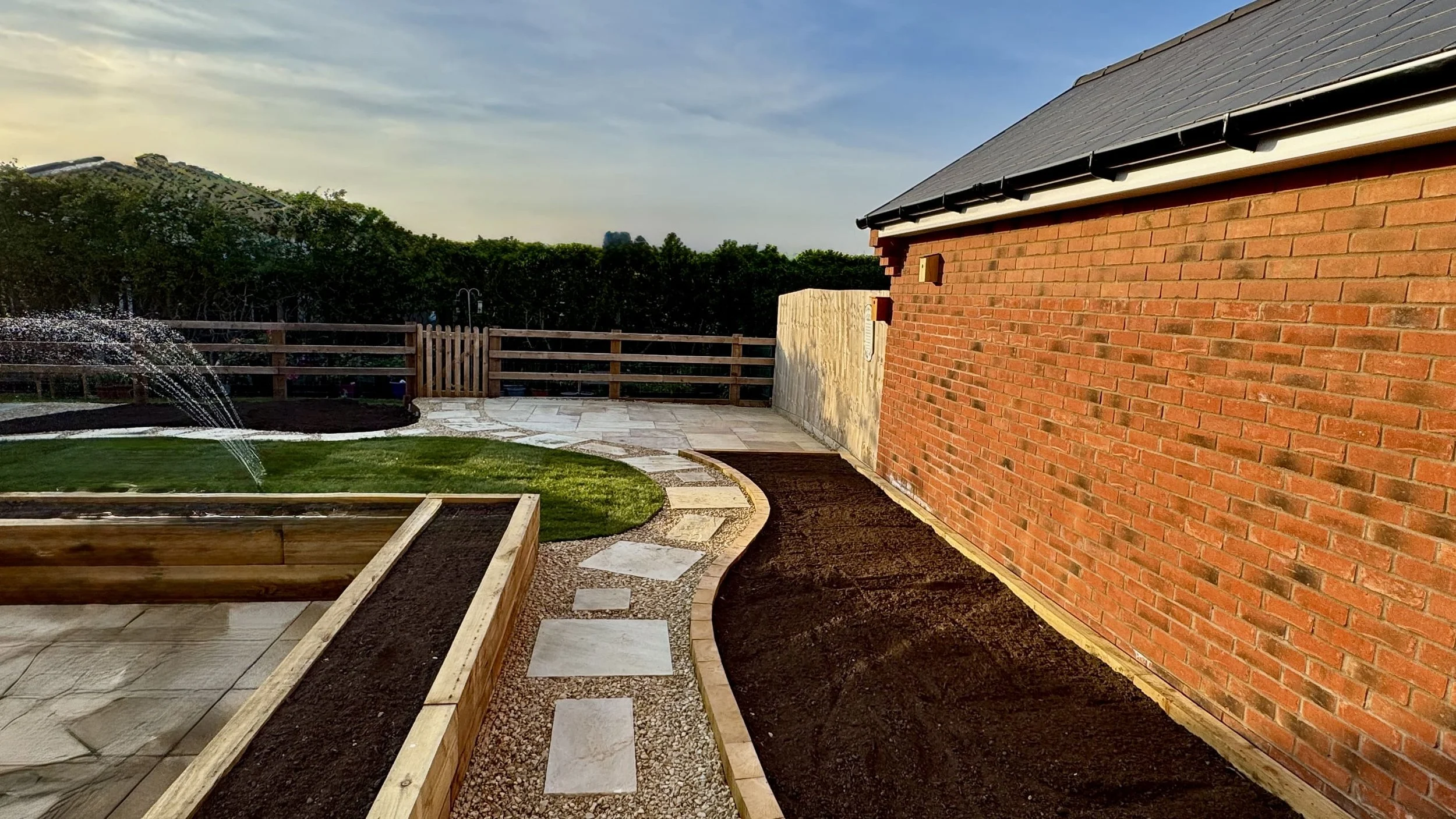
This page covers:
- New turf lawns (fresh lawn installation)
- Lawn renovation (levelling, improving, re-turfing where needed)
- Soil prep: levelling, topsoil, compaction control
- Drainage and damp spots (because Cheltenham weather is… Cheltenham weather)
- Aftercare: watering, first cut, feeding, and how to avoid wrecking it early
Looking at the whole garden? See Landscaper in Cheltenham and related services: Patios, Paving, Fencing, Planting.
Lawn Installation and Turfing in Cheltenham
If you’re searching for lawn installation in Cheltenham, the big question isn’t “which turf looks nice?” It’s “will it actually take?” Turf is living material. It needs contact with good soil, consistent moisture at the start, and a base that isn’t a compacted mess. If you lay turf on uneven, hard ground, you get poor rooting, dry edges, hollows, and that annoying “spongy” feel underfoot.
Northwood Landscape installs new lawns and carries out lawn renovations across Cheltenham and nearby areas. We focus on: proper ground preparation, leveling, clean edges, and practical aftercare. That means your lawn looks good now, but more importantly, it still looks good after it’s been walked on, mown, and lived on.
Want the lawn to flow into a patio or path? See Patios and Paving. Need crisp boundaries? Fencing helps frame the whole space.
Our Lawn Services
We do lawns the practical way: prep first, then turf, then advice on how to look after it. Whether you want a complete new lawn, you need a tired lawn brought back to life, or you want to reshape/level the garden, we can help.
New Turf Lawn Installation+
Installing a new turf lawn is ideal when the existing grass is beyond saving or the garden is being redesigned. We remove the old turf/weeds, correct levels, add and grade topsoil where required, and lay fresh turf to a clean finish.
- Best for: fresh starts, new builds, garden renovations, heavy damage
- Finish: smooth and neat, with defined edges
- Key requirement: good soil contact and early watering
Lawn Renovation and Levelling+
If the lawn is basically OK but looks rough — bumps, dips, thin patches, moss, or muddy low spots — renovation can be the best-value option. We can improve levels, reduce compaction, and rebuild problem areas so the lawn behaves more consistently.
- Best for: bumpy lawns, worn areas, patchy growth, poor drainage zones
- Common fix: topdressing/levelling + reseeding or targeted re-turfing
- Result: smoother mowing, better drainage, cleaner look
Edging and Borders for a Cleaner Look+
Drainage Improvements for Wet Lawns+
If your lawn stays soggy, it won’t thrive. Grass needs air in the soil. Where required, we can address low spots, improve grading, and advise on practical drainage solutions so the lawn is usable for more of the year.
Important: we won’t pretend every wet lawn can be “fixed” with a quick topsoil sprinkle. Some gardens need proper drainage work. We’ll tell you straight.
Real Turf Lawns vs Artificial Grass
In Cheltenham, people ask this all the time. Real turf looks and feels right, cools the garden in summer, and is naturally forgiving underfoot. Artificial grass can be practical for high-wear areas, shaded zones, or homes where the lawn gets destroyed by constant use. Both can work — but both need correct prep to avoid problems.
Real Turf Lawns (Natural Grass)+
A properly installed turf lawn is still the best “traditional” choice for most gardens. It looks natural, it’s comfortable, and it integrates well with planting and patios. The catch is you can’t skip preparation or aftercare. A turf lawn needs a good start to root down properly.
Artificial Grass (If You Want Low-Mud, High-Use)+
Artificial lawns can be a sensible choice where real grass struggles: heavy foot traffic, dogs, constant shade, or people who simply don’t want lawn maintenance. The key is the base. If the base isn’t stable and well-draining, artificial grass becomes ripples, dips, and standing water.
If you want to explore artificial properly, use your dedicated page: Artificial Grass / Astro Turf.
Common Lawn Problems in Cheltenham (And What Actually Causes Them)
A lot of lawn problems get blamed on “bad turf” or “bad weather.” Sometimes the weather is genuinely grim — but most issues come from the same root causes: compacted soil, poor levels, poor drainage, and the wrong maintenance in the first few weeks after installation. Here’s what we see most often on lawn jobs around Cheltenham.
1) Bumps, dips, and a lawn you hate mowing+
Uneven lawns usually come from rushed prep: no proper grading, no removal of old rubble, and turf laid over lumps. Levelling isn’t cosmetic — it affects drainage, mowing, and how the lawn wears. A smooth lawn is easier to cut, easier to maintain, and it simply looks more premium.
2) Water sitting on the surface+
Standing water is usually poor falls (the garden doesn’t drain away), compacted soil that won’t let water infiltrate, or a low spot that collects everything. Sometimes it’s also heavy clay soil that needs smarter handling. The solution depends on the garden: sometimes it’s regrading, sometimes it’s soil improvement, sometimes it needs drainage.
3) Moss taking over+
Moss loves shade, damp, and compacted soil. If your lawn is shaded by fences/trees and the ground stays wet, grass struggles and moss fills the gap. Renovation often means improving airflow, reducing compaction, and making sure the lawn isn’t constantly damp.
If shade is coming from boundary planting/fencing layout, we can factor that into a wider plan with Fencing and Planting.
4) Yellowing / dying turf edges+
Turf edges dry out first. If watering is inconsistent (or you assume rain is enough), edges suffer. Another cause is poor soil contact — air gaps under the turf mean roots can’t establish. Proper rolling/settling and correct watering early on prevents this.
How We Install a New Lawn (The Right Order Matters)
For SEO and transparency: this is the process. It isn’t complicated — it’s just easy to do badly if you skip steps. We don’t aim for “quick.” We aim for “it takes and stays nice.”
1) Strip out old turf/weeds and set the layout+
2) Soil preparation and compaction control+
We prepare the base so it’s not lumpy, not overly compacted, and not full of debris. If topsoil is required, we add it and grade it properly. The aim is a stable, workable surface that turf can root into.
3) Levelling and grading for drainage+
Levelling isn’t “flat at all costs.” It’s about consistent levels and sensible grading so water doesn’t pool. On many Cheltenham gardens, a small correction makes a huge difference to how the lawn behaves through winter.
4) Turf laying and finishing+
Turf is laid tightly with staggered joints (like brickwork) so it knits together. We cut edges neatly and ensure full contact with the soil beneath. Good finishing is what stops the lawn looking like a patchwork quilt.
5) Aftercare guidance (so it actually establishes)+
New lawns fail because people treat them like an established lawn from day one. The first weeks are different: consistent watering matters, heavy foot traffic should be avoided, and the first cut should be done correctly. We’ll tell you what to do — plainly.
New Lawn Aftercare: Watering, First Cut, and Feeding
This section is here because it’s part of doing the job properly. Turf isn’t “finished” the day it’s laid — it’s started. If you want a lawn that roots down and thickens up, the aftercare matters. Here’s the practical version, not the internet fairy tale.
Watering (the bit people get wrong)+
Early on, turf needs consistent moisture so roots can move into the soil. Light sprinkling that wets the surface but not the soil underneath is a waste of time. You want watering that actually penetrates. Weather matters — warm breezy days dry turf out fast, especially at the edges.
- Keep it consistently moist in the early phase (not flooded, not bone dry).
- Pay attention to edges and corners first — they dry out quickest.
- Don’t assume “it rained” means the lawn got a proper drink.
The first cut (do it too early and you can pull it up)+
The first cut should be when the turf is rooted enough not to lift. Keep the mower blade sharp and don’t scalp it. A gentle first cut encourages the lawn to thicken up. Heavy cutting early can stress it.
- Don’t cut it too short.
- Avoid turning the mower harshly on fresh turf.
- Keep foot traffic sensible until established.
Feeding and seasonal care (keep it thick, not thin)+
Feeding is how you keep lawns healthy and resilient — especially if you want that thick, lush look. We can advise on a simple seasonal approach that doesn’t require you to become a part-time groundskeeper.
Overfeeding can cause as many issues as underfeeding. The goal is steady growth and good root health, not a lawn that looks like it’s on steroids for two weeks.
Lawn Installation Areas Around Cheltenham
We install lawns across Cheltenham and nearby areas. If you want a local page, these are good starting points:
Not listed? If you’re nearby, just ask — we cover plenty of surrounding villages too.
Lawn & Turfing FAQs
How much does turfing cost in Cheltenham?+
It depends on access, lawn size, how much removal/levelling is required, and whether topsoil is needed. We do a site visit and provide a clear written quote so you know exactly what’s included.
When is the best time to lay a new lawn?+
Turf can be laid most of the year, but the best results usually come when conditions allow consistent moisture without extremes. The key is aftercare: if you can water properly and avoid heavy use early on, you can get a strong start.
How long before I can walk on new turf?+
Light, careful foot traffic is sometimes unavoidable, but ideally you keep it to a minimum until it has rooted. A new lawn needs time to knit into the soil — that’s what makes it durable.
Can you level an existing bumpy lawn?+
Yes. Levelling can be done as part of renovation. The right approach depends on the severity of bumps/dips and what’s causing them. We’ll advise after seeing it in person.
Want more background before booking? Read Reviews then Request a Quote.
Get a Free Quote for a New Lawn in Cheltenham
Whether you want a fresh turf lawn, a renovation to fix bumps and wet spots, or you want to tie the lawn into a full garden refresh, we’ll come out, assess it properly, and give you a clear written quote.
Want to see more of our work? Start at Landscaper in Cheltenham.