

Garden Steps in Cheltenham: Safe, Comfortable, and Built to Look “Part of the Garden”
Steps are one of those things you notice every day. If they’re too steep, uneven, or slippery, you’ll hate them immediately. If they’re built right, you don’t think about them — you just move through the garden naturally. Northwood Landscape builds garden steps in Cheltenham that feel right underfoot, sit neatly with the surrounding paving, and handle UK weather properly.
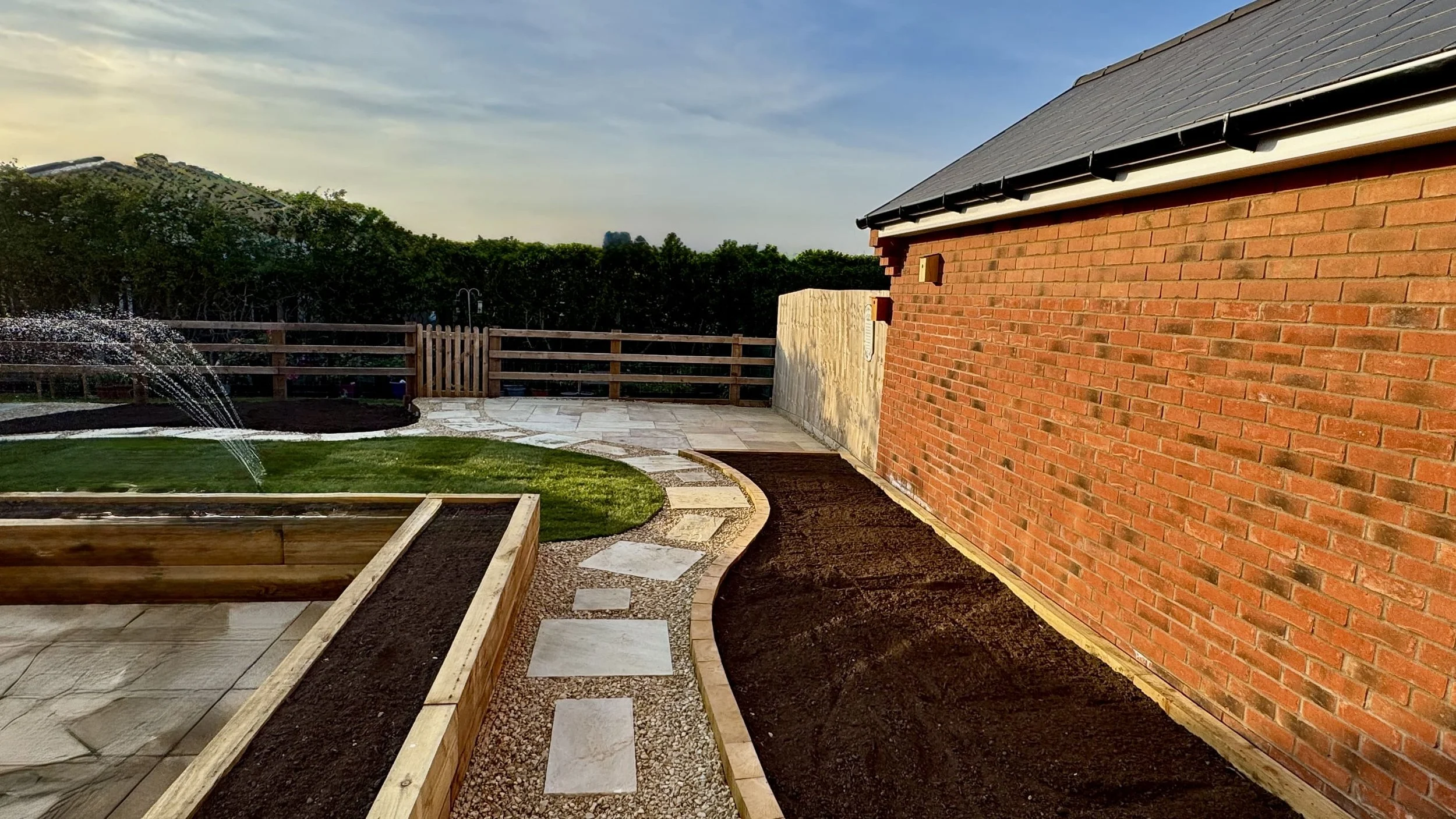
Steps often connect:
- House to patio level
- Patio to lawn level
- Terraced levels on sloping gardens
- Paths through the garden
- Raised beds and retaining walls
Steps usually come with structure. Related pages: Retaining Walls, Paths & Paving, Patios, Garden Renovations.
Why Garden Steps Matter More Than People Think
Steps aren’t just a way of “getting up a slope”. They’re a key part of how a garden feels. Well-built steps make the space feel calm and deliberate. Bad steps make the garden feel awkward. And because we’re in the UK, a step that’s slippery or holds water becomes a safety issue, especially in winter.
In Cheltenham we see a lot of gardens where steps were added as an afterthought: random heights, narrow treads, inconsistent levels, and loose edges. We build steps as part of the structure of the garden — tied into walls, patios and paths — so they look built-in and stay solid.
Comfortable Steps: The Rules of Thumb
There are a few “old school” rules for steps that still hold up because they’re based on how people actually walk. The exact measurements depend on the site, but the idea is always the same: consistent risers, generous treads, and a landing when you need one.
Every riser the same. Every tread the same. Your feet learn the rhythm.
Generous treads reduce that “steep staircase” feel in a garden setting.
On longer runs, a landing breaks the height and makes the garden feel calmer.
If steps hold water, they become slippery, dirty, and miserable in winter.
Steps are usually designed alongside walls and paving: Retaining Walls and Paving.
Types of Garden Steps We Build
Step design depends on the garden style and what the steps are connecting. Some steps are a feature. Some are purely practical. Either way, they need to be safe, consistent and tidy.
Natural stone steps (traditional, premium finish)+
Natural stone steps suit traditional gardens and period properties, and they tie in beautifully with stone patios. The key is clean alignment, consistent heights, and proper support so nothing rocks or settles.
Stone patios: Patios.
Porcelain or paving steps (clean modern lines)+
Modern gardens often suit porcelain or crisp paving finishes. With porcelain, details matter: tidy cuts, neat edge lines, and making sure the surface is safe and drains properly.
Modern paving: Paving.
Blockwork steps (strong and versatile)+
Blockwork steps are a strong option when you need a solid structure that can be rendered, faced, or capped. They integrate well with retaining walls and can be finished to match the garden.
Walls and structure: Retaining Walls.
Sleeper steps (warm, natural, great with planting)+
Sleeper steps work well for certain gardens, especially where you want a softer, natural look. They need correct fixing and support so they stay stable and don’t twist over time.
Often paired with: Raised Beds and Planting.
Why Garden Steps Fail (And What We Do Differently)
Most step failures are boring, predictable issues: weak foundations, inconsistent heights, water pooling, or poor edge restraints. Steps are a high-traffic feature. If anything is loose or badly supported, you’ll feel it quickly.
Common problems with “cheap” steps+
- Uneven risers: trips and awkward walking.
- Loose treads: movement underfoot, dangerous over time.
- Water pooling: algae, slipping, and constant dirt.
- Poor edge restraint: paving creeps and opens joints.
- No structure tying it together: steps separate from walls/paving and drift.
How we build steps to last+
We build steps as part of the garden structure: proper support, correct levels, consistent risers, and sensible drainage. Then we integrate the steps with walls, patios and paths so everything meets neatly.
If the steps are part of a full rebuild: Garden Renovations.
Steps Work Best When the Garden Is Planned Properly
Steps rarely sit on their own. They connect features. The best steps are designed as part of a route through the garden: house → patio → lawn → planting → boundary. When steps are designed alongside the rest, the whole garden feels more “built” and less “patched”.
Steps + retaining walls (terracing done right)+
Terracing a garden is usually walls + steps. That’s how you create usable zones and safe movement between levels.
See: Retaining Walls.
Steps + patios (clean transitions)+
A patio often needs one or two steps to reach the lawn or a path. Done neatly, it looks intentional and makes the space feel premium.
See: Patios.
Steps + paths (safe routes in wet weather)+
Paths with steps create safe routes through a sloping garden, particularly through winter when grass routes turn to mud.
See: Paving.
Steps + planting (soften the structure)+
Planting around steps makes them feel built-in. It also helps visually guide the route and softens hard edges.
See: Planting.
How Much Do Garden Steps Cost in Cheltenham?
Costs depend on the number of steps, the total height change, the material choice (stone, porcelain, block, sleepers), access, and whether steps are being built alongside retaining walls, patios or paths. The biggest cost swings usually come from groundwork and making sure the structure is correct and consistent.
Garden Steps Installation Areas Around Cheltenham
We build garden steps across Cheltenham and surrounding areas:
If you’re nearby but not listed, get in touch — chances are we still cover you.
Garden Steps FAQs
Can you add steps to an existing patio or lawn?+
Yes, in many cases. The key is matching levels properly and making sure the new steps tie into the existing structure. Sometimes it’s straightforward, sometimes it’s better to adjust the surrounding levels to get a cleaner result.
What’s the best material for garden steps?+
It depends on style and use. Natural stone suits traditional gardens, porcelain suits modern clean lines, blockwork is versatile, and sleepers can work well in the right setting. The build quality matters more than the material.
How do you stop steps becoming slippery?+
Correct drainage/falls, good cleaning habits, and choosing appropriate finishes all help. Steps that hold water or stay shaded often grow algae faster, so planning where water goes is crucial.
Do steps usually come with retaining walls?+
Often, yes — especially on sloping gardens. Walls create the levels, steps connect them safely. See: Retaining Walls.
Get a Quote for Garden Steps in Cheltenham
If you need safe, comfortable steps for a sloping garden, new patio level, or terraced renovation, we’ll assess the site properly and quote it clearly. No guesswork — just steps that feel right and stay solid.
Planning a full makeover? Start at Garden Renovations.