

Retaining Walls in Cheltenham
Retaining walls are what turn awkward levels into a usable garden. Done properly, they create clean terraces, safe steps, tidy raised borders, and strong edges to patios and lawns. Done badly, they bulge, lean, crack, and push everything around them out of place. Northwood Landscape builds retaining walls in Cheltenham with solid bases, sensible drainage, and straight finishing — built to last, not built to “look alright for the photos”.
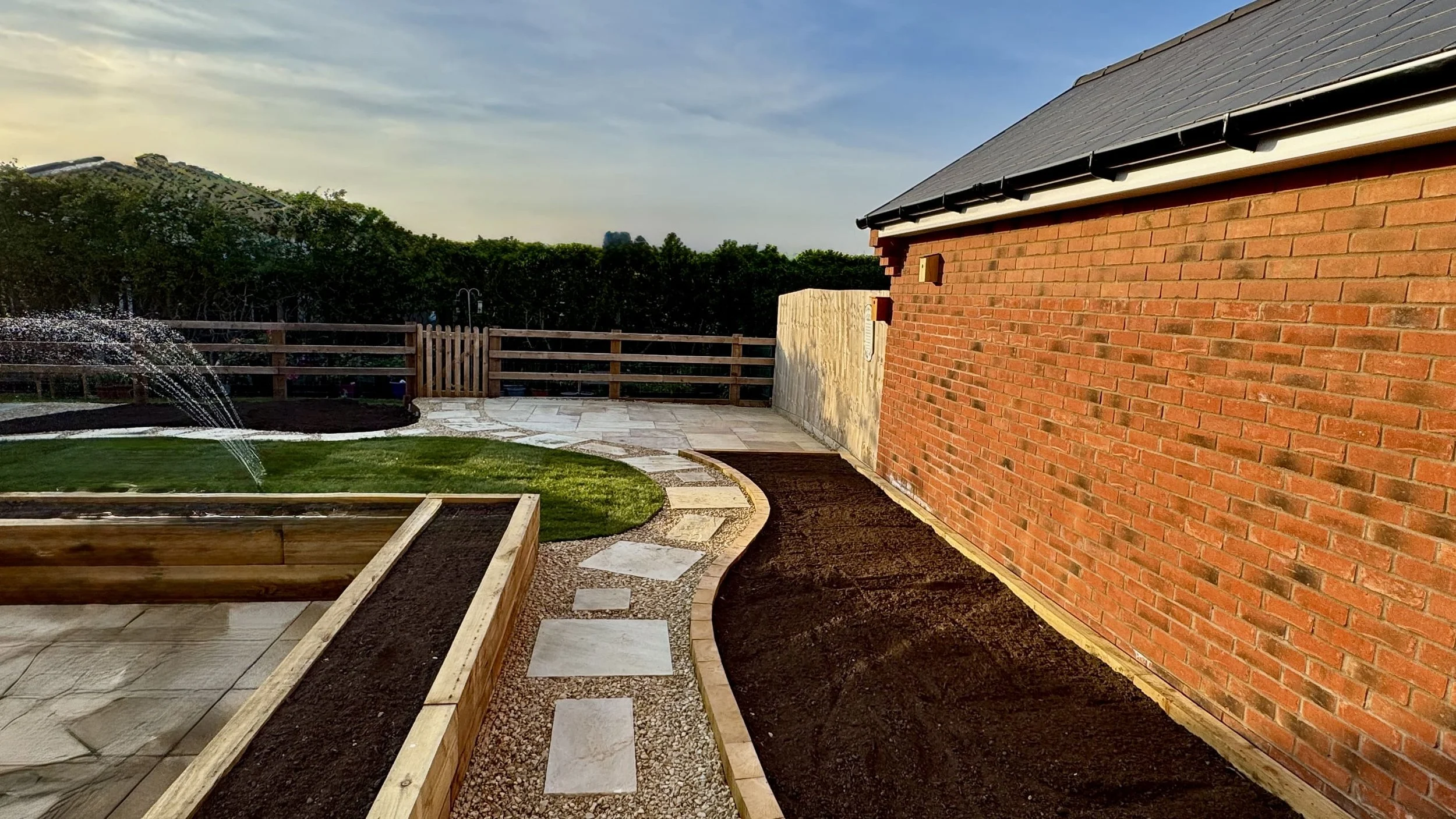
Retaining walls commonly used for:
- Terracing sloping gardens into usable levels
- Creating raised borders and planters
- Holding back soil around patios and paths
- Forming safe, tidy edges for steps
- Replacing failed or leaning existing walls
Doing more than a wall? Start at Garden Renovations. Related services: Patios, Paving, Lawns, Fencing, Planting.
What Is a Retaining Wall?
A retaining wall is a structure designed to hold back soil and create a stable level change. In a typical Cheltenham garden, that can mean terracing a slope so you can actually use the space, building a raised border so planting looks designed, or creating a clean transition between a patio and lawn. In short: retaining walls let you control levels — and level control is the backbone of a proper garden build.
The reason retaining walls need doing properly is pressure. Soil pushes. Water adds weight and pressure. Clay holds water. Winter saturates everything. If a wall doesn’t have a proper base and a sensible drainage approach, it will move over time. That’s when you see the classics: bulging faces, leaning corners, cracked joints, and paving or steps that start to separate.
If your garden is generally boggy, drainage might be step one: Garden Drainage & Soakaways. If this wall is part of a full makeover, see Garden Renovations.
When Do You Need a Retaining Wall?
Not every garden needs one — but if you’ve got levels fighting you, a retaining wall is often the cleanest long-term fix. Here are the common reasons people in Cheltenham call us:
1) Sloping gardens that waste space+
Slopes look fine until you try to live with them. Furniture feels awkward, kids wear ruts into the grass, and mowing becomes a chore. Terracing with retaining walls turns one sloping surface into proper zones: patio level, lawn level, planting level.
Walls often pair with steps and paths. We’re building those pages next, but for now: Paving is the closest match.
2) Raised borders and a more “designed” look+
Raised borders (raised planters) are a retaining wall with a purpose: tidy planting, better soil control, and cleaner edging. They add depth and structure, especially when your garden is currently flat and featureless.
Planting ties in here: Planting.
3) Holding back soil by patios and paths+
4) Replacing failed walls (leaning, bulging, cracking)+
If an existing wall is already moving, it’s normally a base/drainage issue. Cosmetic repairs don’t stop movement. Rebuilding properly is usually the sensible answer if you want the problem gone for good.
If the area is wet or water sits behind the wall, drainage should be part of the plan.
Structural Landscaping Finish (Walls + Levels + Clean Edges)
Retaining walls are rarely “standalone”. They’re usually part of a wider build — patio edges, raised borders, steps, or terraced lawns. Here are a few images from your site that show the sort of clean, structured finish these builds aim for.
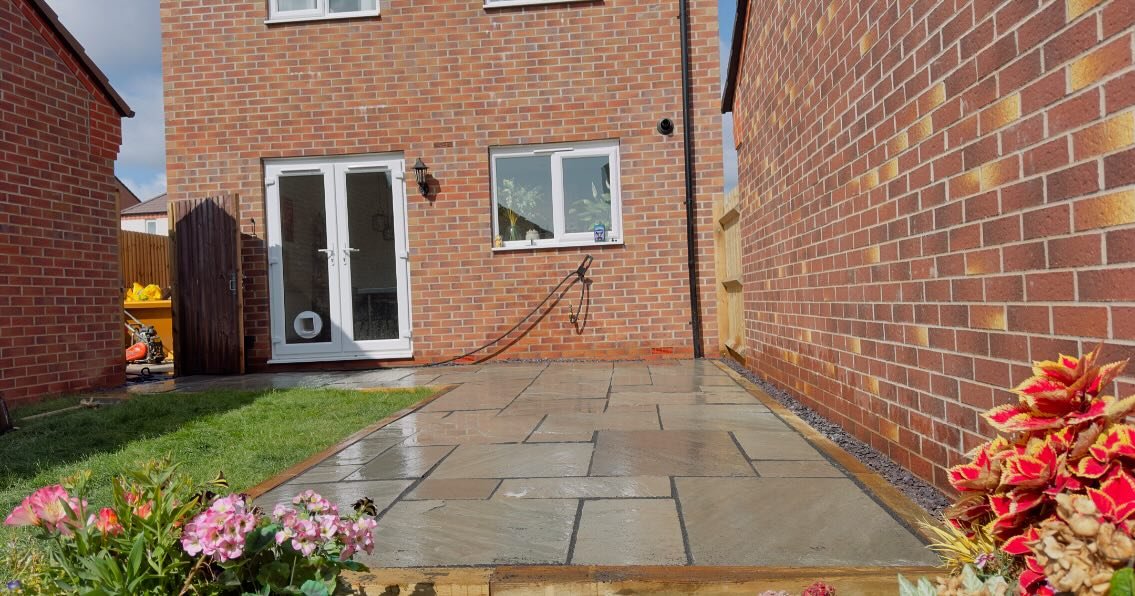
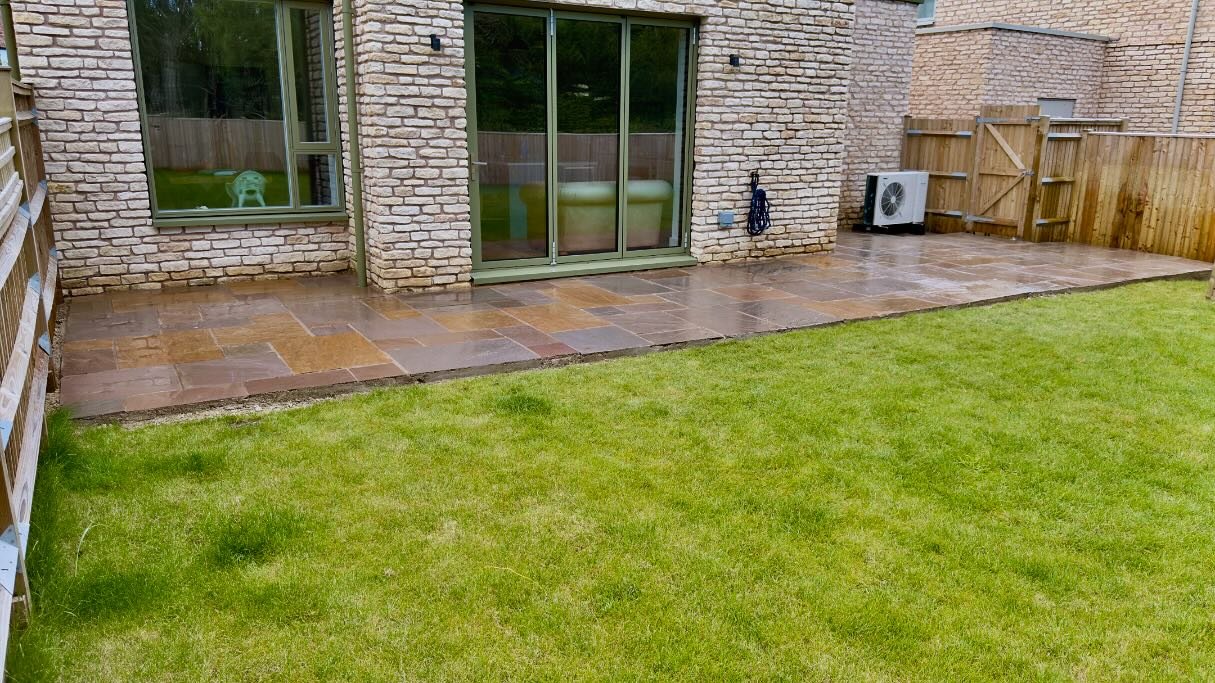
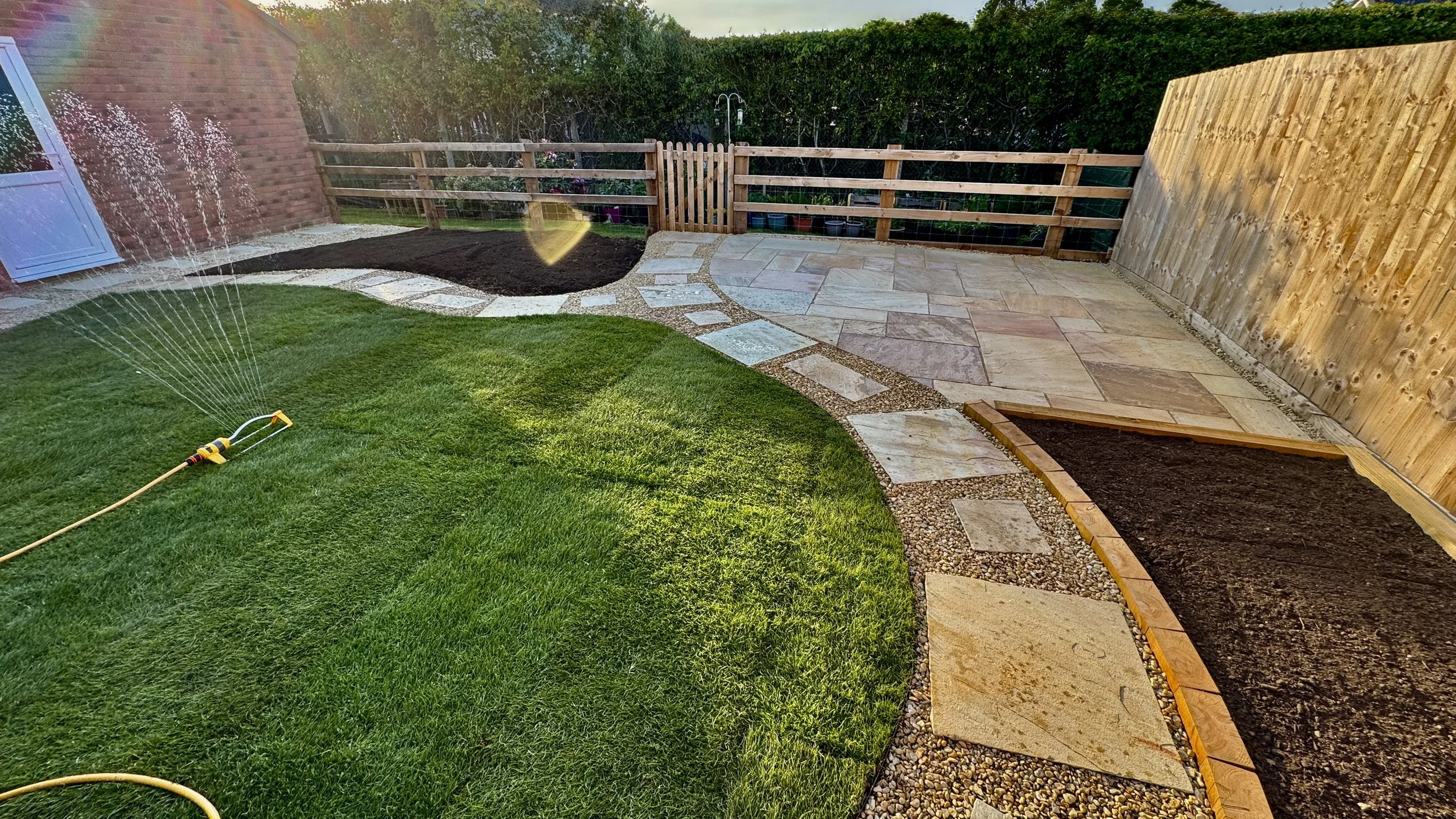

The goal isn’t “a wall”. The goal is a garden that feels level, usable, and deliberate — where patio, lawn, borders and paths meet neatly.
Retaining Wall Options
The “best” retaining wall depends on what it needs to retain, the style of the garden, access, and what it’s connecting to. Below are the common retaining wall styles we build in Cheltenham gardens.
Timber Sleeper Retaining Walls+
Sleeper walls are popular because they look good in modern and traditional gardens, and they’re brilliant for terracing and raised planters. They also pair nicely with lawns and planting because the timber softens the hard edges.
- Best for: low to medium level changes, raised planters, garden zoning
- Look: warm, natural, works well with greenery
- Reality check: sleepers still need proper fixing and drainage — they are retaining soil, not just edging
Sleeper walls often lead into raised beds. Next page in your plan: Raised Beds (we’ll build it after this).
Blockwork Retaining Walls (Render / Face / Coping)+
Block retaining walls are a strong long-term option where you want crisp lines and a more “architectural” look. They can be rendered, faced with stone/brick slips, or finished with coping. They also integrate very well with steps.
- Best for: more demanding retaining, clean modern lines, step integration
- Finish options: render, facing, or coping stones
- Maintenance: generally low
Stone or Stone-Faced Retaining Walls+
Stone walls suit traditional Cheltenham properties and gardens that want a classic feel. A stone-faced wall can look premium if it’s kept tidy, consistent, and the top is finished properly (coping makes a big difference here).
Stone looks timeless — but it still needs proper structure and drainage behind it. Pretty facing doesn’t stop pressure.
If the wall ties into a stone patio, see: Patios.
Raised Planter Walls (Retaining + Planting)+
Raised planter walls are one of the best “value upgrades” in a renovation. They add height, depth and structure, create neat planting zones, and help frame patios and lawns. They can be built from sleepers, blockwork, or masonry depending on the look you want.
Planting makes these shine: Planting. To finish the whole space: Lawns.
Drainage Behind Retaining Walls (Why Walls Fail)
The biggest enemy of a retaining wall is trapped water. Water builds pressure behind the wall and increases the load massively. In the UK, that problem gets worse because you don’t get one “rainy week” — you get months of wet ground, saturated clay, and repeated cycles of soak and dry. If drainage isn’t considered, the wall gradually shifts.
Common signs a wall is failing+
- Bulging face: the centre bows outward.
- Leaning: the wall tips forward over time.
- Cracks: joints or faces split under pressure/settlement.
- Movement in nearby paving: patios/paths start separating or sinking at the edge.
- Wet staining/moss: constant damp behind/around the wall.
How we approach drainage for wall builds+
The correct drainage detail depends on the wall type, retained height, and soil conditions. As a rule, water needs a route away rather than being trapped behind the structure. That may involve free-draining backfill, drainage runs to a suitable outfall, and ensuring surrounding levels don’t direct surface water into the wall.
If drainage is your main issue, see: Garden Drainage & Soakaways.
How We Build Retaining Walls
A good retaining wall build is controlled and boring — and that’s a compliment. Straight lines, correct levels, proper base, sensible drainage. If you want the wall to stay put for years, you don’t rush the prep.
1) Site assessment (levels, soil, water)
We check the level difference, soil type, where water sits, and how the wall connects to patios, lawns, paths, or steps. This is where we decide what wall type suits the job.
2) Excavation and base preparation
We excavate to suit the wall and prepare a stable base. Cheap quotes often quietly reduce this stage. It’s also the stage you can’t “fix later” once the wall starts moving.
3) Build the structure (straight, true, consistent)
We build to line and level, keep faces tidy, and ensure the wall is doing what it’s meant to do: retaining, not drifting. A wall that’s slightly off looks worse over time — especially when paired with paving.
4) Drainage and backfill
Water management is built into the job. We ensure water has a route away, and we backfill sensibly so the wall isn’t loaded badly. This is one of the main differences between “built properly” and “built cheap”.
5) Finishing + integration
We finish the top edge neatly (coping where needed) and tie the wall into the surrounding features: patios, steps, paths, lawns, and planting. This is what makes the build look intentional rather than an afterthought.
6) Tidy up and handover
We leave the site clean and talk through aftercare where relevant — especially if planting or new turf is part of the same build.
If you want everything rebuilt in one go, start at Garden Renovations.
Retaining Walls Work Best as Part of a Plan
A retaining wall can be the difference between a garden that looks “patched” and a garden that looks designed. The key is making the wall work with the other elements: steps that feel natural to walk, paths that guide you through the space, a patio that drains properly, and planting that softens the structure.
Walls + patios (clean edges and controlled levels)+
Walls + lawns (easier mowing, cleaner finish)+
Terraced lawns are easier to mow and easier to use. Walls define edges and keep levels consistent so you’re not fighting muddy dips.
See: Lawns.
Walls + planting (soften the structure)+
Planting is what stops structural landscaping looking harsh. The right planting scheme makes walls feel “built-in”, not bolted on.
See: Planting.
Walls + fencing (privacy and a clean backdrop)+
Boundaries frame everything. If the wall build changes levels near a boundary, it’s often a good moment to upgrade fencing too.
See: Fencing.
How Much Does a Retaining Wall Cost in Cheltenham?
Retaining wall cost depends on height, length, access, material choice (sleepers vs blockwork vs stone), excavation/removal requirements, and the drainage detail needed behind the wall. The biggest difference between quotes is usually what you can’t see: base depth, backfill detail, and whether drainage has been allowed for properly.
Retaining Wall Installation Areas Around Cheltenham
We build retaining walls across Cheltenham and surrounding areas:
If you’re nearby but not listed, get in touch — chances are we still cover you.
Retaining Wall FAQs
Do retaining walls always need drainage?+
In most cases, yes — because trapped water increases pressure behind the wall. The exact drainage detail depends on wall height, soil conditions, and where water can discharge. If the garden is generally wet, it’s often smart to combine the job with Garden Drainage & Soakaways.
Can you rebuild a leaning or bulging wall?+
Yes. We assess what’s causing the movement (often drainage and base) and then rebuild properly so it stops happening again. Patching a failing wall usually just delays the inevitable.
Are sleeper retaining walls strong enough?+
They can be, depending on retained height and installation detail. Sleeper walls are popular, but they must be fixed and drained correctly. If a sleeper wall is treated like decorative edging, it will move.
Can retaining walls be part of a full garden renovation?+
Absolutely — that’s often the best time, because levels, drainage, patios, paths, lawns, and planting can all be planned together. See: Garden Renovations.
Get a Quote for Retaining Walls in Cheltenham
If you’ve got a slope, failing wall, or you want terraces and raised borders as part of a proper garden build, we’ll assess it properly and quote it clearly. No vague scope, no surprises — just a retaining wall that stays where it’s meant to.
Want the bigger picture? Start at Garden Renovations.