

Decking in Cheltenham: Solid Underfoot, Smart Finish, Built for UK Weather
Decking is a brilliant way to create a warm, usable seating area — especially where levels make a patio awkward. But decking only works if it’s built properly. Bad decking becomes bouncy, warped, slippery, and ugly fast. Northwood Landscape installs decking in Cheltenham using timber and composite systems with proper structure, correct fixing, and sensible detailing so it feels solid and stays tidy.
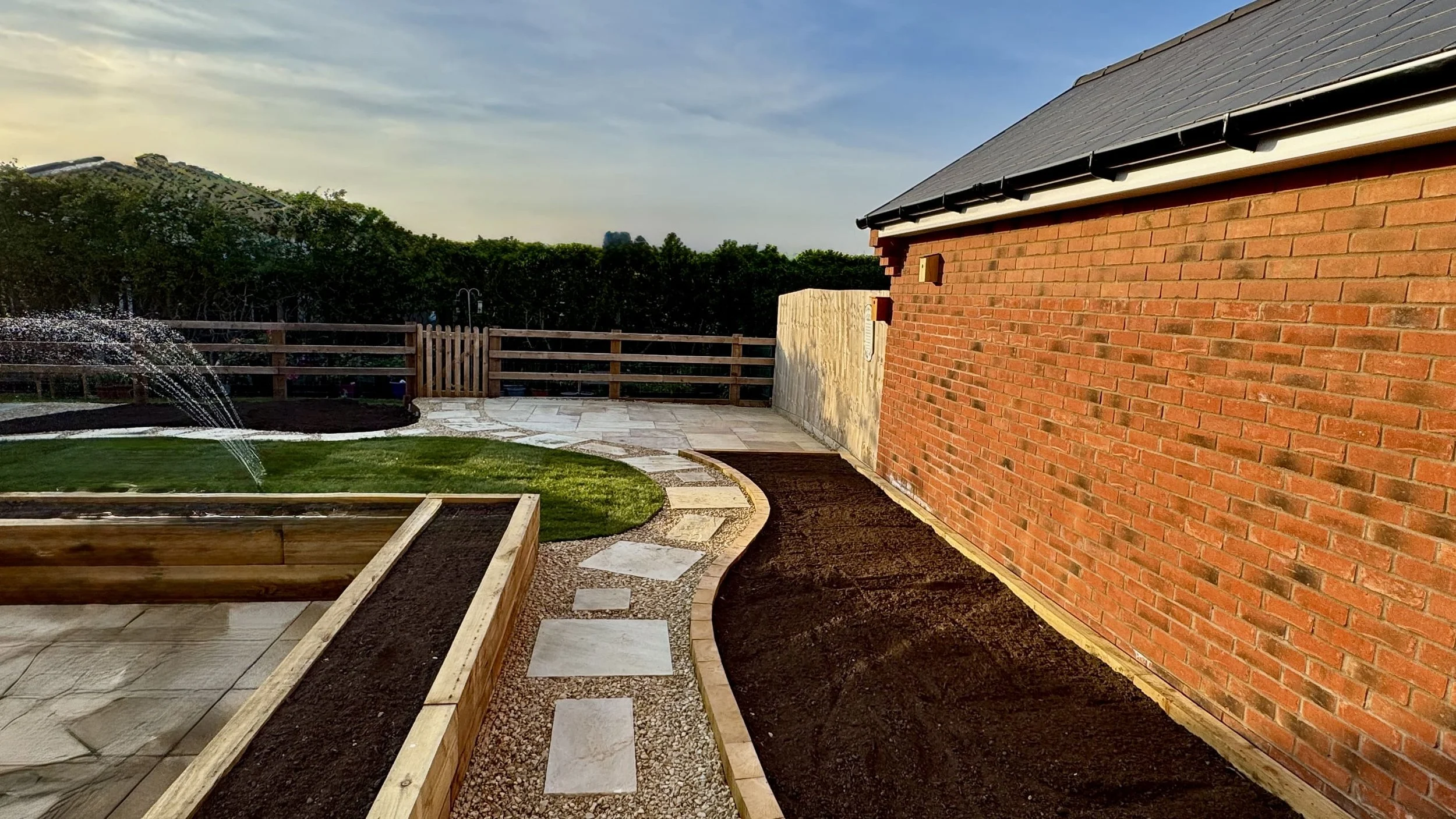
Decking works well for:
- Raised seating areas on sloping gardens
- Warm “outdoor room” feel
- Transitions between house and garden
- Areas where a patio would need lots of excavation
- Pairing with steps, planters and lighting
Related pages: Garden Steps, Retaining Walls, Raised Beds, Patios, Garden Renovations.
Timber and Composite Decking in Cheltenham
Decking can look brilliant — it creates that “outdoor room” feel and makes a garden more usable for seating and entertaining. But decking is also one of the easiest things to get wrong, because the problems usually show up later: bounce, warp, rot, loose boards, and that permanently slippery surface that nobody wants to walk on in winter.
We build decking with the same mindset as patios and structural work: a solid base, correct support spacing, tidy edging, and proper drainage consideration. If you want decking that feels solid underfoot and stays looking smart, the structure underneath is everything.
If you’re weighing up decking vs a patio, browse: Patios. If the garden needs reworking as a whole: Garden Renovations.
Decking Options: Timber vs Composite
The choice usually comes down to style, budget, maintenance, and how much sun/shade the area gets. Timber has a traditional warm look. Composite tends to be lower maintenance and more consistent, but quality varies. Either way, the structure and detailing decide whether the deck lasts.
Timber decking (classic look, warm finish)+
Timber decking looks natural and suits many Cheltenham gardens, especially when paired with planting. It can also be repaired board-by-board if needed. The trade-off is maintenance: timber needs periodic cleaning and treatment if you want it to stay looking sharp.
- Best for: traditional feel, softer look, pairing with planting
- Maintenance: periodic clean; optional treatment depending on the finish you want
- Key detail: ventilation and drainage under the deck to reduce rot risk
Planting to soften the deck: Planting.
Composite decking (low-maintenance style)+
Composite decking is popular for a more modern, consistent look and typically less routine maintenance. It’s not “maintenance-free” — it still needs cleaning — but it generally avoids the same treatment cycle as timber. The big difference between composite decks is product quality and correct installation spacing.
- Best for: modern gardens, consistent look, reduced routine maintenance
- Maintenance: regular cleaning; less ongoing treatment
- Key detail: correct spacing and support so boards stay stable
Raised decking (platforms for sloping gardens)+
Raised decking is often the best solution when you’ve got a slope or awkward levels. Rather than digging half the garden out, you build a level platform that connects naturally to the house or patio doors.
Raised decks often pair with: Garden Steps and Retaining Walls.
Decking as part of a full garden renovation+
Decking works best when it’s planned alongside paths, steps, planting and boundaries — so it doesn’t look bolted on. In full renovations, decking can create a warm seating zone while patios/paths create durable routes.
Start here: Garden Renovations.
How Decking Should Be Built (So It Doesn’t Bounce, Warp, or Rot)
The two biggest complaints we hear about existing decks are bounce and slipperiness. Bounce comes from weak structure: posts, bearers, joists and spacing. Slipperiness often comes from poor drainage/shade and a surface that holds grime. Both problems are avoidable with the right build detail.
What causes “bouncy decking”?+
Bounce comes from inadequate support and spacing. If posts and joists are spaced too far apart, the deck flexes under foot traffic. That flex turns into movement, which turns into loose fixings and long-term problems.
- Support spacing too wide
- Weak or undersized framing
- Poorly fixed structure and bracing
- Uneven or sinking supports due to poor ground preparation
How we reduce rot risk and increase lifespan+
Timber and moisture don’t mix. The key is ventilation and drainage so the underside isn’t permanently damp. We plan the structure so water can drain away and air can move under the deck.
Rot problems are often caused by decks being built too close to soil with no airflow and no drainage plan.
Slip resistance and keeping decking safe+
Decking gets slippery when it stays damp and grows algae. Good drainage detail helps, but so does sensible layout: shaded corners, tight gaps that trap grime, and poor runoff all make it worse.
- Drainage: don’t let water sit on the surface.
- Cleaning: occasional clean prevents algae build-up.
- Material choice: some finishes cope better in shade.
Common “cheap decking” mistakes+
- No proper base/support: movement and sinking.
- Weak frame: bounce and long-term loosening.
- Poor fixings: boards lift, squeak, and shift.
- Messy edges: looks unfinished instantly.
- No consideration for water: rot and slipperiness later.
Decking Design: Making It Look Built-In
Decking looks best when it connects to the rest of the garden. That means clean transitions to paths, steps that feel natural, planting to soften edges, and boundaries that make the space feel private. The goal is a deck that looks like it belongs there — not a platform dumped on the lawn.
Decking + steps (comfortable movement between levels)+
A raised deck usually needs steps. These need to be consistent and comfortable, and they need to drain so they don’t become slippery.
See: Garden Steps.
Decking + raised beds (tidy edges + planting structure)+
Raised beds around a deck soften the look and stop soil spilling onto the boards. They also add height and structure to the garden.
See: Raised Beds and Planting.
Decking + patios (two-zone outdoor living)+
Decking + fencing (privacy and a clean backdrop)+
If the deck is your seating area, privacy matters. A clean boundary and good planting makes the space feel like an outdoor room.
See: Fencing.
Decking Maintenance: Keeping It Looking Good
Decking doesn’t stay perfect by magic, especially in the UK. Leaves, shade, and damp weather lead to grime and algae. The trick is simple: don’t let dirt sit for ages, keep it swept, and give it an occasional clean. If you do that, it stays safe and smart.
Timber decking care (simple routine)+
Keep it swept, avoid leaves building up, and clean it when it starts looking dull. Treatment can be used if you want a certain look, but the main thing is keeping grime from becoming permanent.
Composite decking care (what people get wrong)+
Composite still needs cleaning. People assume “maintenance-free” and then it ends up green and slippery. A light clean routine keeps it right.
How Much Does Decking Cost in Cheltenham?
Decking cost depends on size, height off the ground, access, whether it’s raised and needs supports/steps, and material choice (timber vs composite). The structure underneath is the major labour element — that’s also what separates a deck that feels solid from one that feels like a trampoline.
Decking Installation Areas Around Cheltenham
We install decking across Cheltenham and surrounding areas:
If you’re nearby but not listed, get in touch — chances are we still cover you.
Decking FAQs
Is timber decking a bad idea in the UK?+
Not if it’s built properly and maintained sensibly. The main issues come from poor structure, trapped moisture, and no cleaning routine. Built correctly, timber decking can last well and looks great.
Is composite decking worth it?+
It can be, especially if you want a consistent look with less ongoing treatment. Quality varies by product, and installation detail still matters. Composite still needs cleaning to prevent grime and algae.
Can you build decking on a sloping garden?+
Yes — decking is often the best solution for slopes because it creates a level platform without massive excavation. It usually needs steps and often pairs well with retaining/raised bed structures.
Can decking be part of a full garden renovation?+
Yes — and it works best that way. Layout, levels, steps, paths, planting and boundaries can all be planned together. Start here: Garden Renovations.
Get a Quote for Decking in Cheltenham
If you want a warm, solid seating area that stays tidy and safe in UK weather, we’ll assess the site properly and quote it clearly. No bounce, no messy edges — just decking built right.
Want the bigger picture? Start at Garden Renovations.